Showing posts with label Tamil Nadu. Show all posts

4 March 2015

Youtube Mix

On our long drive to Kaziranga, D played a lot of songs, mostly Bhupen Hazarika. I probably surprised him - and myself - by remembering that one of the songs was from a movie called Chameli Memsaab. Back in the day Sunday afternoon was reserved for regional movies on Doordarshan and this was where I saw the movie. The song (O Bideshi Bandhu) was obviously earworm because I still remember it.  Here it is in not the best print around, though there is a better audio version.


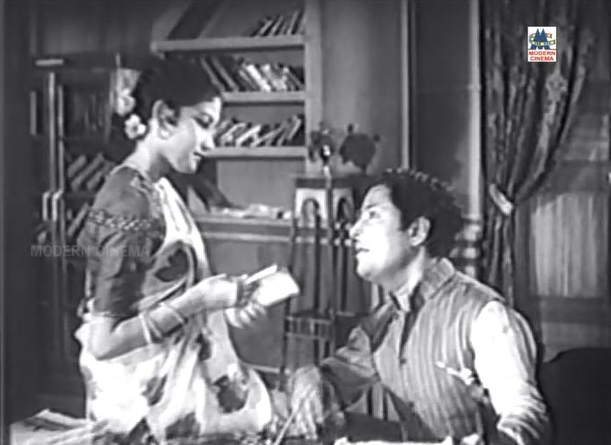
Thanks to my blog (and on the topic of the blog, two longish pieces I did on 17th century Mughal fashion and Kerala), I am a minor expert on Tamil cinema of the 40s and 50s (though admittedly thanks to the excellent Blast from the Past Hindu column by Randor Guy). I quite enjoy some of the old songs that are a little freer than the latter part of the 1950s and later. Sure these early movies are a bit amateurish but somehow they are also more spontaneous and interesting. Even my aunt, an inexhaustible source of all things Tamil, hasn't been able to quench this obsession!

So apart from Sabapathy (I was surprised no one in the family had heard this, also I love AVM costumes of the 1940s), I stumbled upon Thai Ullam and En Thangai. It kind of speaks of the temporary popularity of works that I had no knowledge of a book called East Lynne, which seems a fantastic potboiler. A lot of the early movies have songs that also featured in Hindi movies - this film has Konjum Purave (Thandi Hawaein in Hindi) - I clearly remember my mother singing the Tamil version. And there is this duet, which for some reason I got hooked on. It's kind of nice to listen to not so well known voices (the 50s in fact resulted in monopolies (ugh Lata M), the 40s and early 50s have diverse voices and music).


 My knowledge of Tamil films of the time may be a bit more than required given that I know that the two people in the En Thangai video below starred in Ponmudi :-)


But let's make a complete jump to the present because I remain addicted to K-indie and 10 cm - though it is in B/W:)


26 July 2014

A. Madhaviah's Padmvati

The National Library in Singapore stocks more than a few Indian titles that are not so readily available in India. Or at least I haven't spotted them in the usual bookshops. One of the books I borrowed from the library was Padmavati, one of the first few novels in Tamil. Apart from the milieu and the time it is set in, it is not very interesting as a novel. In fact it made me wonder if a certain timidity is inherent in Tamil Brahmins that makes for safe literature. In Bengal for e.g., the novel was already established when Padmavati was written. And despite certain conventional elements, Bankim's works are complex and morally ambiguous. OK Bankim is a master but you get the drift. Padmavati on the other hand tends to get a bit preachy and the characters are a bit black and white. And despite being billed as a reform movel about the education of women the novel is really about the friendship between the eponymous Padmavati's cousin and later husband, Narayanan and Goaplan. Nevertheless it was fascinating to me because the whole world of Tamil Brahmins at the end of the 19th century is captured in the book. And it speaks of the types in the community that many of the character traits described in the book are familiar to me from my own relatives and acquaintances. And of course it has the usual Tamil Brahmin male preoccupation with devadasis though of course the upright hero doesn't succumb to their wiles. 

It's primary interest to me therefore lies in its portrayal of  South Indian brahmins at the end of the 20th century.  In the deeply conservative community, there are two forces at play forcing some kind of change. One, modern education, largely in the hands of missionaries.  Two, the administrative setup under British rule with its minor officials who wielded a good deal of power over small communities. There are plenty of sharp vignettes throughout the novel that highlight this. To me the most amusing bit was the North-South divide i.e. the divide between Tirunelveli (the setting of the novel) and Thanjavur that is up North.  None of the Thanjavur folk in this are up to any good which was kind of amusing given my family firmly has its origins in Thanjavur. 

This illustration below for e.g. is of a naughty married Thanjavur lady all ready for a sneaky rendezvous with Gopalan. Her equally amorous husband is planning to seduce the virtuous Savitri, sister of Gopalan. Elsewhere in the novel formidable Thanjavur parents masterfully use their children in increasing their worldly wealth via marriages. What can I say, Go Thanjavur! Just kidding.


There is also a fairly long section on drama companies. There is again that faint ambivalence present in Tamil Brahmin novels.  This world recurs in so many texts but there is also a moral stigma attached to it, little good can result by entering it.  I suppose it was a concern for families - our family folklore has a relative who burned his way through the family fortune - leaving his wife completely destitute - in just such a manner.
 

The dissonance between the changes brought about by education and actual community mores occurs throughout the novel.  Because the school is run by missionaries, the students are exposed to and aspire to the values of the West. On the other hand there is the world at home and one's own culture that cannot be denied. While this manifests itself in many ways in the novel, the many references to clothing interested me.  For e.g. the below paragraph describes a groom's attire which shows the norms of masculine attire prior to Western influences.
After his ritual bath, Gopalan was decked in silk and zari, with sandal paste and kumkumam on his forehead and sweet scented jasmine in his hair. He wore jewellery too - a double stranded waist chain over his silk veshti, a jewelled pendant strung on his golden punul, the scared thread, a pearl necklace intertwined with a flower garland, diamond earrings and gem studded rings. Gold bracelets accentuated his youth and natural charm. The kohl, applied by Savithri, made his eyes appear more beautiful than ever. With lips reddened by the juice of the betel chewed and a complexion aglow with shy happiness, he looked enchanting, like Manmathan with his body restored.
For us today, the flowers in the hair and waist belts for the veshti may seem excessive and even feminine, but they seem to have been common in Madhaviah’s time. This description in fact reminded me of the way idols are decked in temples.  Gopalan’s English education makes him embarrassed to be so decked, on the other hand he is secretly pleased to be the traditional bridegroom.  And of course it is interesting that bride and groom are equally bedecked,  bar the fact that saris were probably more coloured and elaborate than a veshti.

The novel of course isn't about fashion at all. Rather it is of its time and the stray references here and there provide clues to clothing norms of the time.  For example, I often wondered about the origins of the half-sari in Tamil Nadu.  From the novel it appears that it was a fashionable outfit worn by young Christian girls. This appears in a section where one of the characters seriously contemplates converting to Christianity.

 After a few days, he began to visit the boy’s home in Palayamkottai and met his sisters who, dressed in the daring new style of pavadai, blouse and dhavani (emphasis mine), strolled about book in hand. 

That is the kind of detail that is hard to come by for folk like me who blog on history. Happily, the translated novel is available because it was done by one of the author's grand-daughters (the illustrations done in the 1950s are that of his nephew M. Krishnan). It's one of those moments where you have serious thoughts about an education that privileges English over regional languages, almost all one's literary history is a black box if a translation is not available.


A handsome young man of twenty five, dressed in a vannan washed zari veshti, muslin shirt and uppada angavastram arrived after awhile. Such was his appearance that even the old hag in the kitchen would have concluded that he was an English educated government official. Else would he wear ritually unclean, washerman washed clothes or a chandu pottu on his forehead? Without a government job, how could he have sported whiskers or acquired Tiruchirapalli footwear or a silver wristwatch. 

The illustration and text above is of a minor functionary who arrives for Gopalan’s wedding (Padmavati, A. Madhaviah). Though not senior they apparently wielded a good amount of power in the districts, far far more than a senior functionary in say Chennai, and were therefore to be appropriately appeased at all times. It's a fascinating paragraph providing visual clues of status in his dressing, both in terms of wealth and a departure from orthodox.


 There is also  descriptions of jewellery of the time now and then.

All in all despite a very weak plot, the book was enjoyable because of its familiar milieu. And of course I was over the moon with those few throwaway lines on the davani!


9 January 2014

In Tiruvidaimarudur-2

I was aware that my great grandparents neighbours still lived in Tiruvidaimarudur. But it hardly seemed right to knock on their door given our tenuous connection.  As it happened, they spotted me on the street taking pictures of the other half of the house and called me in.  A cup of coffee was made for me, a lunch invitation was extended.  Their grandson, a cute little scamp, hung around to play with me.  It turned out that the little kids I had played with were all now grown up with families of their own. They had kept in touch with other branches of the family.  So I stayed a bit, we chatted a bit about this and that, about our lives at present. When I left they gave me the customary gift of a small sum of money as my elders. I myself had arrived empty handed, unsure of who I might know in the village. The house itself, rather their part of it, was as I remembered it, right down to the tubewell, the fields at the back. The road that led to the river was green with growing rice and small groves of coconut trees.  The pathashalai opposite the house was now a school, albeit run from Kanchi. It was hard to sit there and not remember the past. At the same time, life had moved on and yet a continuity remained. Normally a sense of detachment is part of all my interactions, at this point though my emotions felt inexplicably stirred.


This feeling was only intensified by a visit to my mother's aunt (much younger than her though) who lived in Kumbakonam.  The old house here was much discussed in our family but I had never been there. Nor had I ever met the aunt.  The house had been demolished to make way for a newer model but otherwise the family's manners and habits seemed pickled in time. They remained a vaidika family with all its attendant rituals and prejudices.  The lane their house was in led to the Kaveri and I strolled down for a bit.  The girls doing their washing at the river (in salwar kameez, now an approved dress for young girls in Kumbakonam), fell into an easy conversation.  As did the men painting the old temple at the end of the lane.

My aunt herself was a bit quiet, perhaps unsure as to how to treat a woman she barely knew, but as the hours progressed she felt more at ease. Later we went to meet the daughter-in-law who lived in a rented portion of a small house.  The daughter of an orthodox man with many daughters, she was married to the eldest son who was a purohita. All kinds of conflicts raged in her and she was not shy about discussing them.  Every conversation was an assertion of the life that was hers, though the assertion only made her happiness suspect.  Everything about her was different from me-her decrying of education, her caste obsessions, her narrow definition of acceptable femininity-and yet I felt drawn to some inner warmth and truth in her that was warped by her upbringing.


Just before I left I went to the Darasuram temple. I regretted leaving it to the last, it was incredibly beautiful.  It's a small but perfectly formed temple that holds its own against larger, grander temples. By all accounts like Banteay Srei, yet barely visited.  There was far too much to see and far little information.

Travel isn't a preoccupation of mine of late.  Too often in our times it is just a few days in a town. a rush through the sights captured in photographs, a bit of eating out, a sampling of the local capture. I prefer to stay for awhile or just meander in my own home town. But some trips have resonance, they take you to a different place internally.  Going to Kumbakonam and Tiruvidaimarudur was such a trip, I came away with my heart and mind full of a certain kind of happiness that I have not felt for a long time. The colours, the light of the land stayed with me for many days. Though this happiness wasn't entirely due to the people I met, I thought of them often too. Most of all of Vidya's life and her kindness.

At the start of my trip I took a cycle rickshaw to my hotel. Mr Murugesan my driver was perhaps in his late 50s. The rickshaw is kind of "low class", a cheap alternative for short trips.  Anyone with a little money takes the motorised "auto".  Due to several reasons, largely Mr Murugesan, I ended up taking a rickshaw. It was a long ride to my hotel, Mr Murugesan had misheard me and had not anticipated that he would need to cycle a few kilometers.  This left me a bit agitated because of the effort Mr Murugesan had to put in. Still he had committed to the job and he was determined to reach me to my destination. Once we reached, we parted. A few words of appreciation, a little bit more money than he had asked for left him happy. I asked for a picture.  And he let down his veshti, combed his hair a bit and posed, a dignified man in a lowly trade. I felt moved, a little teary even.

Everything flowed on from then, touched with a little magic.

8 January 2014

In Tiruvidaimarudur-1

Almost all of my family can trace their (known) roots back to a clutch of villages in and around Kumbakonam. Because my parents themselves were not brought up in the south of the country, these were mere names to us. Or would have been had it not been for my great-grandfather's "country-change", much like a sea change or tree change, in the 1950s.  In doing this my great-grandfather moved back to a house in the village of Tiruvidaimarudur which had belonged to his mother.  My mother had been exceptionally close to her grandparents and had spent a good part of her childhood with them. In turn, she had wanted us to be better acquainted with them. Additionally my parents were related so my great grandparents served as elders for both sections of the family. So though most of our holidays were spent with our own grandparents in Bombay, we did make the occasional trip to Tiruvidaimarudur. These trips remain etched in memory being few and far between and to a place that was entirely different from both genteel, incestuous cantonments and the louder delights of the city. The last visit I made was in 1988 as a young woman. Without the freedoms of childhood it felt a bit restrictive. Most of my visit was spent writing letters to friends in Mumbai and playing with the gaggle of kids next door. At this point, the house had been partitioned as my great-grandparents found its upkeep difficult. The subsequent year my great grandfather died, the house was sold and my great grandmother moved to Bombay.  And though I had every intention of returning once I never did until last year.

The Day Express was the train we took to Kumbakonam from where on we took local transport to Tiruvidaimarudur.  This has been replaced by the car for most people I know.  But it had also been years since I took a train. I had the time and the inclination so one morning I took the train from Egmore station and was on my way.  And cliche as it is, a different India takes public transport, especially if it is second class. I had been warned of course. Do not talk to strangers! Do not give out your own name! Do not accept food! As it turned out, everyone was voluble with the details of their own life leaving me little time to explain my own. As for the food, it was delicious:) No doubt the lack of a marriage and my travelling on my own was puzzling to most people I met, yet most accepted it or in the odd case went out of their way to be helpful.  After the dust and chaos of Chennai, it was comforting too to see clean stations, an endless stretch of greenery with the added bonus of pleasant weather.

I had little idea what I would do in Kumbakonam where I was staying bar booking a car at some point and making my way to my great-grandfather's place. As it turned out, the time I had proved to be very little. Kumbakonam itself was half-remembered. I wasn't very interested in the town as a child though the women in the house would make a trip now and then to escape the confines of Tiruvidaimarudur. We would tag along to the sari shop or to the temples (the minute I spotted the temple lake I remembered sitting on the steps with my mother), the trip made tolerable by the promise of dosai and ice-cream.  As a young adult I never found it pleasant, my Bombay manners and clothes attracting more than a few comments. Now as a much older woman I found the  town changed. There are a few swish resorts and it takes some time to take in the fact that a breakfast of muesli and toast is possible.  There are more than a few foreigners as well as Indians on the temple trail.  But it all felt familiar, quiet and soothing. Beneath all that is the hint of a stifling small town though this is unlikely to impinge on the average visitor.


Returning to Tiruvidaimarudur itself, I was surprised by how little had changed.  Of course the place had grown, the demographic had changed. It seemed more prosperous and yet poverty persists.  But more than the physical changes, it was something of the spirit of the place that hadn't changed.  Perhaps too I had come in the right season, the region had had two weeks of rain and everything felt green and promising.  The river, which I last remembered as very dry, had water. Everywhere one turned it was green. And though narrow roads and tiny houses remained, the courtyards were swept and tidy.  And above all this the temple loomed, still the same and so vast that parts of it are simply locked up.  Here, as in Maruthuvakudi which has a small temple that is my father's kuladeivam and where I stopped by briefly, you wonder why at a particular time the region had such an efflorescence of temple building. Few temples compare with the sheer size and variety of those found in and around Thanjavur.

11 June 2012

Look Back and Repent

Of the three movies my mother had suggested - Parashakti, Andha Naal and Thirumbi Paar, the last had remained on my to do list for awhile. Thirumbi Paar turned out to be a meandering, not very engaging film and the only reason I am blogging about it is because there is very little on it on the Web. 

As with Manthiri Kumari, Karunanidhi takes an old tale and spins it into a modern tale castigating society at large, rather the political parties of the time.  The agitprop is tiring in this outing and there are so many story strands that you can't be bothered unravelling them by the time you have hit the half way mark in the film.  Briefly Parandhama (Sivaji Ganesan) is a thoroughly bad sort but his principal vice is seducing innocent ladies. Here's one caught hook, line and sinker - unfortunately the lady comes to a bad end but not before saying vengeance shall be mine!


But he is also overall bad guy and after awhile you can't keep up with his many nefarious activities which hilariously range from adopting a poet's identity to getting mixed up with union politics.  He's a Jack of all criminal trades so to say. Here he is smoking a cigarette and being a bad boy.


Conversely his sister is a super saintly sort who has brought him up - perhaps some passing virus infected him with criminality? - and you would normally be bored by weeping sister except that she is played by an actress of lambent beauty and grace (Pandari Bai). This woman must be Tamil cinema's best kept secret - she is excellent in all three movies I mentioned and the only reason to give Thirumbi Paar passing marks.


On her way to meet her niece, she meets the poet Pandian - whose identity was stolen by her brother - on the train.  By a series of circumstances Pandian, in spite of returning her love, ends up marrying her niece. Which makes Parandhama rather angry because he was quite looking forward to being the wolf to the niece's Red Riding Hood. 


Meanwhile Parandhama is consumed by rage and it's quite confusing keeping up with how bad he is being. If he is not seducing ladies, he is giving speeches hoodwinking innocent workers, maybe arranging for the odd robbery and also generally hanging out at some printer's joint smoking cigarettes and producing junk news. There's some odd sub-plots, a few songs which muddle the movie further. 

Things come to a bad, bad pass and in keeping with that old tale, the sister offers herself to the libertine brother. Whereupon he is brought to his senses and promises to reform but the sister cannot believe in this change of heart and kills him.


Not that you care.  I believe Karunanidhi was a very successful screenwriter in which case the Tamil appetite for bombast must be very large.  By this film I found myself growing tired of the verbal trickery, the dense dialogues and the politics of his films and longed for something much more elegant and sophisticated than the relentless barrage of words that seem to be his scripts. And it made me wonder whether Tamil cinema was ill served by being smothered in the rich sauce of Karunanidhi style language for decades.  Some unintentional hilarity does exist in these films given the travails and fortunes of the Karunanidhi clan, like what if the man did look back at all he has wrought?!
_*_

I might take a blogging hiatus after this unless there is something I really want to blog about.  I feel the need for something different, let's see how it goes....

24 October 2011

A River Runs Through

“The past is a foreign country, they do things differently there”.

So goes LP Hartley’s oft quoted opening sentence from The Go-Between. The future is unknown, the present is what it is but the past is rich, known, unknown, and complex and can be endlessly rearranged for meaning at different stages of life. Mining one’s own past is not just about memory and nostalgia but also curiosity about the lives of those who lived before us, the things they did differently.

A set of photographs taken in the mid 70s made me think of my great-grandparents.

My mother’s grandparents had lived in Bombay for a long period of time. My great grandfather had worked as a surveyor with the British but at some point the great grandparents moved to Tiruvidaimarudur, a tiny village on the Kaveri. The sprawling village house they lived in was almost the last in a lane that was exclusively Brahmin at the time. The lane tapered off into fields that led down to the river. My mother and her brother spent their early years here, my mother was therefore especially attached to her grandparents and we predisposed to like them.

This village house had served as a centre for many family functions, my parents had got married here and in ’74 so did an uncle. My parents took us to the wedding and we stayed on. The wedding had resulted in a full house and us city rats - my brother and I and relatives down from Chennai spent most of our time on the large swing in the house. When they left, the days became silent and long. Still my great grandparents did much to keep us amused as did our parents.

Opposite the village house was a pathashalai. For a large part of the morning we would hear lessons being recited but later in the day the boys would come out to play and my father and brother would join in a game of cricket or the like. One such game had resulted in a gash on my brother’s head, duly and efficiently stitched up by the local doctor. Much was made of my brother’s bravery because of the lack of anaesthesia of any sort. Though at that age I would often disrupt and join in my brother’s games back home I didn’t join them in Tiruvidaimarudur. Instead I spent a great deal of time in the garden of the pathashalai which was fragrant with flowers or roaming around the gardens and fields behind the houses on the street, my botanical impulses all afire. Part of the reason for my “feminisation” in the village was my great grandmother whose methods of coercion were gentle and therefore highly effective. I was thus put to work on making a kolam every morning, plucking flowers (I was given a sweet little steel basket which made me a happy girl) and the like.

I recall my parents being very happy here. My mother as I said was very fond of her grandparents and she was relaxed in their presence and her independent questioning streak was sublimated by the daily tasks of cooking with her grandmother, washing up and the like. This was in spite of the fact that her tales of village life were sometimes sordid, she never failed to let us know that everything good and evil in human life was there in that tiny patch of earth under southern skies. The saddest of these tales was of a childless aunt who had indulged her as a child but had borne more than a few taunts and would often cry herself to sleep. For my father, the air, the fresh produce, the milking of the cows, all this suited him. He would give us a bath in the mornings, we squealing with delight at the buckets of cold well water poured on us. For the rest of the time he occupied himself in several ways, the chief of which consisted of teasing an overtly orthodox great uncle with tales of his Army life and his renunciation of caste to become a Kshatriya.

Bullock carts and a sole Ambassador cab were the only modes of transport in getting around the village. We had arrived in a bullock cart and would leave in one. For the rest of the stay we would walk everywhere. A visit to the temple would mean a walk and my brother and I would peer down the long dark passageways in the temple, do our pradakshinams and always always harbour the fear that the Brahmahathi in the temple was waiting for us and we would never return to Delhi. Once we were taken to see some kind of temple procession. And sometimes we would be out late at night, once to see a movie in the open air theatre, and the return journey would be through ill lit lanes. The houses on the side would have flickering oil lamps, my great grandmother whose hand I held tightly would cry out a soft greeting once in awhile. The lanes were not lonely though; I can still see and smell the shuffle of people as we wound our tired way home. At the point where we turned into our lane lay an unsecured pond and I lived in fear that I would inadvertently drown in its inky night waters. By day though the pond held no fear for me, it was like something in an enchanted tale right out of Amar Chitra Katha partly because of its many lotus blooms. But I was also a child of my environment, I wanted very much to put them in a vase in our drawing room at home.

Though we were young and knew how to while away the hours, my brother and I would often long for books. My great-grandfather, a spare erect man who dressed in crisp clean clothes, was a diligent reader. He was a member of the local library and would take us there. I can still recollect his voice on our walks this many years later. It was a small library and my brother and I, ravenous readers, had finished with its contents in a week or so. Nevertheless we would reborrow the books and let me just say that I knew Russian Folk Tales better than any lesson I had swotted in my school term. In retrospect it is amazing that the library had any English books at all. My great grandfather himself wrote precise English and his writing style tended to the epistolary, we would get detailed letters on occasion when we returned home.

At the end of the lane as I mentioned lay the river. Sometimes my father would take us there though we were forbidden to swim in its waters. My mother and her brother, less supervised, had however mucked around in its waters as children. We would drag our feet along the edge of the water and occasionally a fish would nibble our toes but that was as far as it got. Here the river did not look imposing but we had been taken to Kumbakonam once and the river was far more grand there though not more so than a few that we had passed on our long journey south.

In spite of the idyllic nature of our visit, village life ran its usual course. My great grandparents help, Visayam, was forbidden to touch anything or enter certain places. Everyone enquired as to the caste of our help back in Delhi. A girl aged ten got married on our street; my great grandmother went for the wedding and pronounced that never had a bride looked more charming. This was one event that agitated my mother. On a much later visit I learnt that the girl had run away and returned to her natal home. There were unsavoury rumours about the pathashalai vadiyar. And there was just a hint that the demography of the village was changing, this was much more apparent on our later visit a decade later.

In Tayeb Salih’s Season of Migration to the North (an excellent book that I recommend), the narrator returns at the end of his studies in the UK to his grandfather’s village at the bend of the Nile. To the narrator his grandfather stands for a past that is timeless and reassuring even as things change. Of course, as the narrator realises, this world is not as pure as he imagines. Much as my mother explained. My own grandparents lived in the city; in spite of their house being on its fringes we in fact came to a bustling metropolis on most of our holidays. Yet in Asian life everywhere our roots seem to lie in the idea of a village much like my great grandfather’s. Writing this made me feel that I am no different, that the past that is timeless and reassuring to me is not my grandparents life, it is the life of a small infrequently visited village on the Kaveri.

In picture above from L to R: My grandmother (who doesn’t make an appearance in this piece), my mother, my great grandparents and the overly orthodox uncle. In front, brother and me.