Showing posts with label Indian Cinema. Show all posts

4 March 2015

Youtube Mix

On our long drive to Kaziranga, D played a lot of songs, mostly Bhupen Hazarika. I probably surprised him - and myself - by remembering that one of the songs was from a movie called Chameli Memsaab. Back in the day Sunday afternoon was reserved for regional movies on Doordarshan and this was where I saw the movie. The song (O Bideshi Bandhu) was obviously earworm because I still remember it.  Here it is in not the best print around, though there is a better audio version.


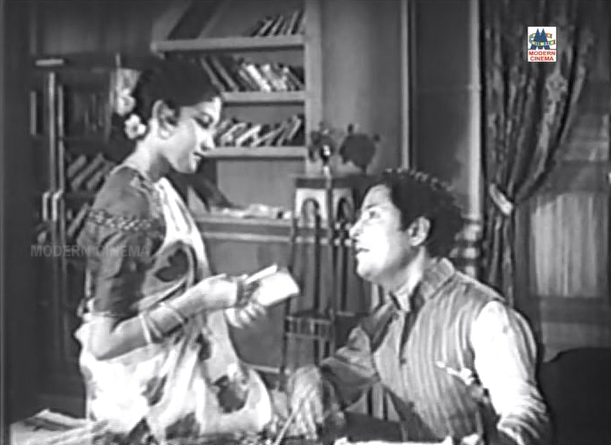
Thanks to my blog (and on the topic of the blog, two longish pieces I did on 17th century Mughal fashion and Kerala), I am a minor expert on Tamil cinema of the 40s and 50s (though admittedly thanks to the excellent Blast from the Past Hindu column by Randor Guy). I quite enjoy some of the old songs that are a little freer than the latter part of the 1950s and later. Sure these early movies are a bit amateurish but somehow they are also more spontaneous and interesting. Even my aunt, an inexhaustible source of all things Tamil, hasn't been able to quench this obsession!

So apart from Sabapathy (I was surprised no one in the family had heard this, also I love AVM costumes of the 1940s), I stumbled upon Thai Ullam and En Thangai. It kind of speaks of the temporary popularity of works that I had no knowledge of a book called East Lynne, which seems a fantastic potboiler. A lot of the early movies have songs that also featured in Hindi movies - this film has Konjum Purave (Thandi Hawaein in Hindi) - I clearly remember my mother singing the Tamil version. And there is this duet, which for some reason I got hooked on. It's kind of nice to listen to not so well known voices (the 50s in fact resulted in monopolies (ugh Lata M), the 40s and early 50s have diverse voices and music).


 My knowledge of Tamil films of the time may be a bit more than required given that I know that the two people in the En Thangai video below starred in Ponmudi :-)


But let's make a complete jump to the present because I remain addicted to K-indie and 10 cm - though it is in B/W:)


14 May 2013

Things I Like


Right now I am reading The Maias. Its a door stopper of a book and I want to bunk a day's work and curl up and devour it all in one gulp. Sadly I snatch reading time here and there to take it in. Thus far it is a classy soap that loves exclamation marks but that is just the plot, there is so much going on and Eca de Q is having so much fun and at the same time it is a sprawling, leisurely commentary on 19th century Portugal and I am entirely captivated and can't wait to finish it and restart all over again. Also I think I really really need to visit Portugal because whatever little I have seen and read (Mysteries of Lisbon, you are perfect) has been so absorbing and interesting that you have to remind yourself that these people are writing about themselves as the backwater of Europe.


I spend way too much time on tumblr, its like a rabbit hole you fall into and then you reappear and you want to write #IDK #holy fuck #excuse his beauty #obsessive replaying #cuz why not - because those are the tags you see along with other even more incoherent fangirling tags and then you realise that unlike most of tumblr which is VERY YOUNG you are on the wrong side of 40 and well perhaps a lyricist like Johnny Flynn doesn't quite deserve that and on that note here is his song, I am Light.  Only Nick Drake is rotated more often in Chez Anu. Pic Source here. And IDK is I don't know:)


And lastly, three cheers for Caravan which gets top marks not for being a great mag but for actually posting my favourite short story, Ras, in a new translation.  Even Indian cinema couldn't ruin it, not that it didn't try (to be fair it wasn't bad).


11 June 2012

Look Back and Repent

Of the three movies my mother had suggested - Parashakti, Andha Naal and Thirumbi Paar, the last had remained on my to do list for awhile. Thirumbi Paar turned out to be a meandering, not very engaging film and the only reason I am blogging about it is because there is very little on it on the Web. 

As with Manthiri Kumari, Karunanidhi takes an old tale and spins it into a modern tale castigating society at large, rather the political parties of the time.  The agitprop is tiring in this outing and there are so many story strands that you can't be bothered unravelling them by the time you have hit the half way mark in the film.  Briefly Parandhama (Sivaji Ganesan) is a thoroughly bad sort but his principal vice is seducing innocent ladies. Here's one caught hook, line and sinker - unfortunately the lady comes to a bad end but not before saying vengeance shall be mine!


But he is also overall bad guy and after awhile you can't keep up with his many nefarious activities which hilariously range from adopting a poet's identity to getting mixed up with union politics.  He's a Jack of all criminal trades so to say. Here he is smoking a cigarette and being a bad boy.


Conversely his sister is a super saintly sort who has brought him up - perhaps some passing virus infected him with criminality? - and you would normally be bored by weeping sister except that she is played by an actress of lambent beauty and grace (Pandari Bai). This woman must be Tamil cinema's best kept secret - she is excellent in all three movies I mentioned and the only reason to give Thirumbi Paar passing marks.


On her way to meet her niece, she meets the poet Pandian - whose identity was stolen by her brother - on the train.  By a series of circumstances Pandian, in spite of returning her love, ends up marrying her niece. Which makes Parandhama rather angry because he was quite looking forward to being the wolf to the niece's Red Riding Hood. 


Meanwhile Parandhama is consumed by rage and it's quite confusing keeping up with how bad he is being. If he is not seducing ladies, he is giving speeches hoodwinking innocent workers, maybe arranging for the odd robbery and also generally hanging out at some printer's joint smoking cigarettes and producing junk news. There's some odd sub-plots, a few songs which muddle the movie further. 

Things come to a bad, bad pass and in keeping with that old tale, the sister offers herself to the libertine brother. Whereupon he is brought to his senses and promises to reform but the sister cannot believe in this change of heart and kills him.


Not that you care.  I believe Karunanidhi was a very successful screenwriter in which case the Tamil appetite for bombast must be very large.  By this film I found myself growing tired of the verbal trickery, the dense dialogues and the politics of his films and longed for something much more elegant and sophisticated than the relentless barrage of words that seem to be his scripts. And it made me wonder whether Tamil cinema was ill served by being smothered in the rich sauce of Karunanidhi style language for decades.  Some unintentional hilarity does exist in these films given the travails and fortunes of the Karunanidhi clan, like what if the man did look back at all he has wrought?!
_*_

I might take a blogging hiatus after this unless there is something I really want to blog about.  I feel the need for something different, let's see how it goes....

9 April 2012

On Devdas

Before I forget the details, I thought I would blog a less facile piece on Devdas given the amount of reading and viewing my review of Dev D entailed.


The bare facts of the novel (more a novella) are well known and simple.  Devdas and Paro are childhood playmates.   Though devoted to each other, it is clear from the early chapters of the novel that Devdas is a spoilt boy and Paro, for all her fondness for Devdas, is not above seeking sweet revenge for his cruelty.  The two are parted when Devdas leaves for his studies in Calcutta and then reunited as adults.  Childhood intimacy blossoms into a kind of romance culminating in Paro’s daring proposal.  Devdas reacts in all the wrong ways.  Intimidated by parental disapproval he returns to Calcutta and sends Paro a letter rejecting her proposal.  At the very next instant he realises his folly but it is already too late.  Paro and her piqued family have agreed to another proposal from a much older man and Paro is not willing to change her mind for the fickle Devdas.  This decision has disastrous consequences for both.  Devdas returns to the city and sinks into depression in a way perhaps not clearly understandable even to himself.  Paro resigns herself to her marriage. And where earlier Devdas had eschewed the more unsavoury elements of city life, now he begins to accompany Chunni Babu, his city friend, to the brothels.  Significantly, Devdas takes to drink and not whoring even though he has a ready and devoted admirer in the prostitute/courtesan Chandramukhi.  From here on the novel traces Devdas’ decline, a decline that cannot be stalled by the love of not just one but two good women.   Where Paro’s sadness is sublimated by the requirements of domesticity, Devdas’ is full blown, it is as if a single act precipitates a decline he cannot fathom or control.  The novel ends with Devdas’ return to fulfil a promise to Paro to meet her before his death but even this is denied and he dies a lonely death.

That Devdas is an anti-hero is clear from the ending chapters of Devdas where the author begs his reader to have pity for Devdas’ fate even though it is self-inflicted. The book was written when Saratchandra was a young man and in fact the novel it comes closest to is Goethe’s The Sorrows of Young Werther.  Both authors were a little exasperated by the runaway success of their novels but it is clear that the story of a young man undone by his first romance culminating in his death resonated with many young male readers.  Devdas' female protagonists are also very much the product of a young man’s imagination, a cruel, all-consuming first love and a devoted “fallen woman”.  Above all it is a tale of a melancholy that cannot be shaken, a state of mind that is no doubt alluring to the romantically inclined.
Given its success the novella has been much analysed, especially since it has a hero who does….nothing.   This is fertile ground for any number of theories, especially those relating to the emasculating effect of colonialism.  To my mind, this is not the case.  Like well to do young men of the time, Devdas does indeed go the city which is where young Indian men would have likely been first exposed to Western mores.  But there is little hint of this world in the novel or any indication that Devdas is torn between two different worlds.  In fact the city descriptions largely relate to the world of brothels and dancing girls, which seem to have little to do with whatever European pursuits the city offered.  Devdas’ ineffectualness seems more the result of being the younger son; he is neither interested in nor very encouraged to manage his father’s estates.  These remain largely in the hands of his elder brother though Devdas never lacks for money.  Further his impetuousness (contrary to some analyses Devdas is not indecisive, Saratchandra calls him prone to action without thinking), his callowness and his unthinking acceptance of female devotion all stem from the cosseted, pampered childhood of many Indian men.  In fact the novella (at least in translation) does not have the conflicts that resulted from exposure to Western influences as might be seen in a Tagore novel.  Its world is completely Indian and ruled by Indian mores, any other influences are referred to only indirectly.  It is therefore not surprising that Devdas has been translated into a number of Indian languages since its first publication but its first English translation of any note appears to have been the result of the 2002 film.  
In translation, Devdas for all that it is the work of an immature author, is a surprisingly gripping and easy read, Saratchandra knew how to keep a reader‘s attention.   It is also in a way cinema-ready so it is not surprising that Saratchandra’s dissolute, sad hero was on film as early as the silent era.  But the first Hindi language adaptation of any note and certainly one that was a runaway success was Barua’s film.  The entire film is lost (it is typical of India that there is little record of the film but variants of Devdas live on in film and literature) but what little there is of it on youtube suggests many musical interludes, a given since it starred KL Saigal (and Pahadi Sanyal as Chunni Babu).   The film provided the template for Bimal Roy’s version which possibly remains the classic Devdas film (in Hindi).
The 1955 Devdas film is formal, a trifle stolid and entirely faithful to the novel though it lacks the glimmer of humour present in the novel and in the 1935 film.  It is handsomely cast with the stars of the era and their performances are effective but studied.   The formal nature of the film sometimes distances you from the protagonists but for all that it carries you along so that Devdas’ return to the village where he wanders lost and bereft is an affecting moment (the spirit of the 1935 and 1955 films is nicely contrasted in the filming of this moment).  In any event by the time this film came along, the Devdas template for a hero was set and any number of films of the era deal with lost love, dying heroes, heroines bound by duty and the like.
But a revival of Devdas itself had to wait till 2002.  Though ostensibly set in Bengal, the 2002 movie owed everything to the conventions of the decade and to the idea of Bollywood that had formed by then. Hence the gaudy sets, elaborate costumes, duelling mothers and long passages of dialogue.  All this has little to do with Saratchandra’s novella which while providing for a pan Indian hero is also rooted in the simplicity of rural Bengal.   Still, beneath the overpowering moveable feast that is Devdas 2002, the nature of the Paro-Devdas-Chandramukhi triangle remains intact.  It is fundamental to the novel that Paro and Devdas’ relationship is deeply conflicted and possibly unconsummated yet neither can form other adult relationships though Devdas does feel a kind of love for Chandramukhi.  Their somewhat twisted bond runs too deep to be broken.
But this is what a film that came later in the decade attempted to do (though Pyaasa presages it to an extent).  Dev D, no doubt riding on the success of the 2002 film, did away with the Bengal setting and relocated the entire action to the present and the Punjab.  It was also the first attempt at a revisionist approach to the Devdas tale; thus far all films had stayed faithful to the novel.  As it turned out, the hipster approach simply did not work.  One in focussing on Chandramukhi, it added an adolescent dimension to the tale, the desire to bestow a happy ending on the fallen woman.  But Devdas is emphatically not about Chandramukhi and Dev D loses its sense of direction the minute the focus shifts to her.  Two the relocation to the Punjab adds a dimension to Devdas that is simply not there in the original.  For all his faults, Devdas is largely a gentle soul and generous.  Dev D on the other hand is somewhat unpleasant in his Punjabi arrogance which culminates in a hit and run. Once Paro weds there is little to the movie and it cannot be enjoyed as a piss take on the Devdas tradition or a cerebral revisionist take on a classic.  
Devdas is no one’s favourite novel, perhaps not even its author.  The character is easily mockable, young men who have a nodding acquaintance with novella or film would most likely profess a dislike of the character (as might young women but for entirely separate reasons).  Yet the fact that nearly a century after his creation he lives on as an archetypal Indian hero is surely a testimony to the enduring power of an immature work that is also  strange and singular.

27 January 2012

French Clothing/Indian Film

Rather unusually for me, disinterest has resulted in the lack of a clothes post in a while. Internally I have been grappling with the oh so important problem of transitioning my wardrobe to something more mature but it hardly feels pressing or interesting so I have done little apart from a burst of auditing this month. Selvedge, a textile magazine I subscribe to, however still offers many pleasures (some day I hope to do an article for them on the itinerant sari sellers of India – surely a dying breed – some day….) and I have been savouring the latest issue in bits and pieces. One of the pieces in the magazine was on the new movement towards modesty in clothing, perhaps in reaction to a decade of body con dresses, lycra and the like. Embodying this modesty is Le Vestiaire De Jeanne, a fashion line started by its designer for her younger sister. Germaine Greer once wrote that the French were one of few people who knew how to dress their young appropriately. And this line does steer clear of frills, pink and Disney pop-tart fashion. It’s a bit like a marriage between convent girl attire and Japanese minimalism and it mostly works though it could do with introducing some colour.
__*__

I finally got around to watching a few Satyajit Ray movies I had picked up in India but after all that anticipation, they were slightly disappointing. Disappointing when compared to other Ray films i.e., they are head and shoulders above the fare I have been reviewing. Devi - in which an old man sees the Goddess in his young daughter-in-law- is about the suffocating, hallucinatory nature of superstition. Though beautifully shot and performed, it was ultimately a bit of a let down because it is a tad didactic – especially in the conversations between the young husband and his professor, representing of course the forces of reason. Without in any way endorsing superstition, there is also a hint of the smug, bourgeois sensibility endemic to such films.

Shatranj Ke Khiladi was one of Ray’s few Hindi film outings and is based on a Premchand story set in the dying days of Awadh as a princely state. It’s effete elites are part of the high culture of Lucknow and are devoted to poetry (the Nawab, played by Amjad Khan) or to chess (the players of the title). Meanwhile the British, robust and vulgar, have taken steps towards annexation – an event that would lead to the Mutiny and eventually the removal of the Company Bahadur. There are a lot of things to like in this movie and it works perfectly well when the focus is on the chess players, Mirza and Mir (Sanjeev Kumar and Saeed Jaffrey). Unfortunately there is a heavy handed voiceover explaining the events of the time (by Mr Bachchan), long dialogues on the underlying politics both in the Nawab’s court and in the British camp and though all this is meant as a compare and contrast with Mir and Mirza's chess game, it feels both lifeless and superfluous. Here and there it works, e.g. Wajid Ali Shah’s dance, the Prime Minister's (Victor Banerjee) recognition that nothing can save Awadh but for the most part it doesn’t. There is a comparison of text and film here, whatever Premchand’s intentions were it appears to have been modified for 1970s audiences and not for the better. The movie looks at 1856 through the telescope of later events but would have been much better had it let the audience connect the dots. It is hard to believe that Awadh’s rulers or the British were being little other than politically expedient and myopic, as people usually are when events are unfurling in real time. And perhaps Ray doesn’t entirely get Premchand, his Sadgati from memory also had mixed reviews.
__*__


No Stiff Upper Lips or Trousers for Awadhi Toffs

Back to frivolity and let’s end with clothes. Apparently the fashions of 1856 dictated wide pantaloons, a long tunic and gossamer thin shawls for men and women. Unfortunately, given India is still giddy with being in the body con era, I don’t think we will be seeing an immediate revival :-)

You can see more of the clothes - and an excellent song n dance - here.  Shortly after the Prime Minister informs the Nawab that he has little choice but to sign the new treaty and quit town. 

And on the pain of quitting, a Wajid Ali Shah thumri here. As he says to his distraught Prime Minister on the verge of losing Oudh, "only poetry and music can bring tears to a man's eyes."

22 November 2011

Manthiri Kumari

New review is of a Tamil movie released in 1950, Manthiri Kumari.

Reviewing these films have left me little time for writing anything else, though tres facile and silly they require a fair bit of work. I wouldn't have watched these films were it not for writing the reviews for my cousin - perhaps a good thing as the earlier reviews of arthouse flicks on this site perhaps just have the one interested reader :-).  It's been an interesting exercise and makes me appreciate commercial films (for lack of a better word) a little more.  Manthiri Kumari for e.g. is a crowd pleaser and inordinately long but once you enter into the spirit of the thing it proves to be quite a delectable film.

And some random pictures I took this week.

Peonies on my Window

Life Death

Assemblage

16 November 2010

Three From India

It isn’t until I came to Sydney that I started watching movies on a regular basis. The foreign films on SBS were a catalyst – as were super cheap DVDs from a brother based in SE Asia :-)

In spite of the movie watching I still feel a bit bemused by visual media, well at least the entertainment part of it.  There’s something a little strange about an entire industry composed of people play acting so we can be as the saying goes, amused to death.   Theatre aka playacting has been around forever, nevertheless it feels different.  For one it is a labour intensive enterprise which limits the endless reruns of television or movie halls.  And at least some parts of it are part of a continuing tradition of storytelling, like an annual Ram Leela.  So watching grown up people act out endless made up tales can sometimes feel like a waste of time.

Of course in the world at large the appetite for manufactured tales only seems to be increasing.  And perhaps nowhere more so than in India which must surely lead the world in terms of sheer output, both on the big screen and by way of television. A pity then that in this vast outpouring, there is hardly anything of merit. One may extol Bollywood’s campiness and joy and there are blogs devoted to it as an art form but to me it often seems like the ice golas of my childhood, highly coloured and sweetened on the outside but tasteless once past the surface. And while Indian arthouse films have conventionally existed in the slipstream of popular cinema and are a welcome corrective to the general dross, many simply aren’t as good as films made elsewhere. Of the movies I picked up while in India this is true of two movies that I saw recently, Ishqiya and Love, Sex aur Dhoka.  On their own they are a change from the bewildering mess of most Indian movies (here I include lauded movies like 3 Idiots, which did its best to live up to the latter part of its title) but they still fall way short of the movies that normally find themselves awarded on the festival circuit.

Ishqiya is part of a genre that can best be termed the bawdy UP sex caper though to be honest the only similar movie I have seen is Omkara which is hardly a caper.  Still one knows the type, an ostensibly rustic film set in Northern badlands featuring bad ass men, lusty wenches and accents broad enough to convince urban filmgoers that the whole enterprise is entirely authentic. Ishqiya is no different though I can’t seem to recollect the mandatory item number with the usual mirchi laundiya descriptors.   Though Ms. Balan’s character is of that type even in respectable widowhood.  Add to this two small time crooks on the run and you have the classic caper. Then add to the mix a comic villain, a smart ass kid with the best dialogues, a few songs and it all jogs along nicely enough till it falls apart quite spectacularly half way through and limps its way to a supposedly clever ending.  Any resemblance to the real UP is purely coincidental.  It could have been better to be truly enjoyable, as it is I think one is supposed to feel grateful that it exists at all. 

Khosla ka Ghosla was a nice enough addition to the kind of cinema Indian filmmakers do best, i.e. the joys and travails of the middle class. I can’t quite trace its origins but the genre certainly peaked with the charming and inoffensive movies of the Chatterjee-Mukherjee brigade in the 70s and even some Ray-Sen movies in many ways belong to this genre.  Few movies effectively capture Delhi, all of Dibakar Banerjee’s do, though this Delhi is a far cry from the Delhi of Chashme Buddoor.  Similarly Oye Lucky! Lucky Oye! was also very effective in immersing the viewer in the Delhi of the lower middle classes but somehow its faintly surreal tone was lost on me.  And the Paresh Rawal bit weakened the film.  LSD seems a companion piece on the nature of modern India but it too fell short in far too many ways.  It does have an affecting middle section (maybe its the actors who made this section) but on the whole it never rose beyond the ordinary.  It is not your average Bollywood flick for sure but surely by now this is a filmmaker who should be measured against his international contemporaries. And if one does so, the movie falls short. The different modes of filming for the three sections (briefly, the honour killing, the sex tape and the sting operation), the general observations on a voyeuristic society where everything is filmed, and the stories themselves never really transcend the obvious and you have the feeling you have seen it all before.  In short, the richly bizarre, cruel, delicate, subversive and contradictory realities of India far outstrip any attempt at fictionalisation and the movie itself fails to see beneath this surface.

The third movie I saw Wake up Sid doesn’t seem to fall into the conventional Bollywood/Arthouse divide. Rather it is an indie film on the lives of self-absorbed twenty somethings that owes much to its American progenitors. But because it doesn’t want to be anything else than a slight, coming of age roman à clef, it has its charms.  It is undemanding and sweetly performed, though Ranbir Kapoor at times reminded me of a line from a Keith Gessen novel where Gessen tartly observes that people’s expressions were now down to the few arch mannerisms of television shows. Surprisingly, in spite of the slightness it had a genuinely affecting ending, helped along by this song.

This song works but on the whole can Indian cinema leave song interludes behind?!

And now to non-amuse myself for awhile.

3 September 2010

Fam-Com in the time of Family

On my visit to Chennai I picked up a couple of Tamil movies for my grandfather. Most of the films were from the 50s and early 60s and I had heard of them through my mother. My grandfather had seen all the films but he was more than happy to give them a second spin. We first watched பாà®®ா விஜயம் (Bama Vijayam) late into the night; though a bit dated in its sentiments it was a competent enough film with a few laughs along the way.

The next morning we fell to discussing Tamil films of the mid 50s (about which my grandfather of course knew a fair bit) and came to the general consensus that as a rule they were superior to their better known Hindi counterparts. Part of this is because of a theatrical tradition in Tamil Nadu, பாà®®ா விஜயம் for e.g. boasts a few actors who had been trained in a theatrical tradition and knew how to deliver lines with confidence, my grandfather in fact knew the theatre troupes that the actors belonged to. As an e.g. Nagesh is sort of the Johnny Walker of the South but with a much expanded acting range. And while the nature of acting has changed and the actor of the 50s is far too mannered for our times, the training and conventions they follow are all too visible. The other giveaways are the scripts, which are a lot tighter and internally consistent than the average Hindi film of the same era. Additionally they place a great deal of emphasis on the beauty, ambiguity and vagaries of language. Admittedly, some of this is lost on me but it is not hard to see that the films are for an audience appreciative of both language and its manipulation. Bar the songs, this is rarely to be found in a 1950s Hindi film.

Like many other Tamil movies of the time, பாà®®ா விஜயம் is a family drama or perhaps more correctly a family comedy (the fam-com!). Perhaps I am wrong but it seems a genre native to South India, as sturdy and long lasting in its conventions as the romantic comedy. It almost seems to come to life in the 50s as a genre, many earlier Tamil films that I have seen appear to be historicals and mythologicals. Many of the films deal with a multi-generational family set-up with defined roles for all members. No matter what course the film follows, all require the rehabilitation of the paterfamilias role and a return to family order. Both the strain of family bonds and their ultimate cohesiveness are explored though the catalyst is often a familiar outsider like a faithful family retainer. In one way or the other the genre still lives on, in particular in the many serials that choke TV channels, indicating that at least the ideal of family life in India has remained relatively unchanged.

The discussion on Tamil cinema seemed to energise my grandfather and we both left the table in the happy haze that lingers after an interesting discussion. On my return to Sydney, he watched a few more and we talked about them over the phone. I meant to go back and talk a little more of the movies he had seen and the theatre groups that existed in Tamil Nadu. That is not to be.

In the last years of his life my grandfather wrote incessantly to me, perhaps he didn’t want his thoughts to be forgotten. Those discussions are now stilled. There is an element of sadness in that but there is also much in a person’s life that is unsaid. My grandfather lived long but even a long life has its silences and is ultimately rendered ephemeral. What my grandfather thought is now fragmented - lodged here and there in a few of us but also scattered to the winds. And so it is and should be.

22 February 2010

A Paluskar Song

The past week I was listening to the songs of Baiju Bawra and it occurred to me that I had almost forgotten that D.V. Paluskar sang a song in this movie. And that at one point in my life I had a Paluskar record that I listened to every day, so enraptured had I been by his voice. Anyway to make up for lost time, the song (Aaj Gawat Man Mero) has been on high rotation for the past week. As also youtube snippets.


I can't say who is technically the better singer, Amir Khan or DVP, but it seems sort of fitting that DVP sings for the lead character because his technique is tempered with a sweetness and charm.

Baiju Bawra also reminded me that Meena Kumari and Dilip Kumar remain perhaps the best actors that Hindi cinema has ever produced (bar their descent into caricatures of themselves in the latter half of their careers). And that the purity of diction they possessed is in itself a certain kind of poetry.

Of course Baiju Bawra also reminded me that Bharat Bhushan remains the benchmark for actor most likely to approximate a tree. Though trees are things of beauty and it's probably an insult to compare them to a wooden actor.

20 April 2009

Bharat Se Bollywood Tak

In the past few months, I met a few Indians transplanted to Australia at a couple of drinks and dinner occasions. In the mixed crowd, discussion turned to things Indian, largely Mumbai blasts and the like. And then to lighten the mood, Bollywood. I confessed to rarely watching the films. The firangs having a love affair with the genre, of which these days there seem to be a fair number, were mildly discomfited. The transplanted Indians accused me of being a traitor. Though the mood was light-hearted, I was a bit surprised that not watching a Bollywood flick was suddenly on par with say, supporting Pakistan in a cricket match. Surely it wasn't always like this. After all in the not too distant past, friends had made the pilgrimage to Huma-Heena & Ambar-Oscar but did not insist on dragging me along on the grounds of patriotism.

I don't think I thought much about Bollywood till I moved to Australia. It is not a genre I am particularly fond of, perhaps this was because of a two year period in Kanpur when my mother, severely depressed, would dress us up and take us to see a movie every week at the Armapore theatre. My brother and I were then 9 and 11, respectively. Not one of these, from lurid movies with Sulakashana Pandit to Manmohan Desai crowd pleasers held any charm for us. More often than not we were piled onto our parents scooter with the bribe of a masala dosai to follow. Happily this movie going did not last but the prospect of spending three hours in the company of Bollywood is not one I look forward to even today.

When I moved to Australia, the reinvention of Bollywood from a guilty pleasure to a pop form in search of cultural studies was just beginning. "Bollywood on Bondi" was held, Lagaan had had good press, Bride and Prejudice was in the offing and so on. Kind people struggling to sustain a conversation would often turn to Bollywood. It was perhaps in all innocence, the way one may assume the popularity of a Friends or a Sex in the City in Sydney, but it did get a bit tiresome. It is a feeling not different from what an Australian may feel when questioned closely on crocodile wrangling. Indians I met would suggest getting together in the weekend to watch the "latest Bollywood film" - which set off memories of Kanpur sans masala dosai. If it played a minimal part in my Indian life, it seemed a wee bit omnipotent in my Australian life.

Partly, this is because the genre is now so emblematic of India. The movies of the 70s and 80s do not stand for anything except a general silliness and geniality, a means to kill three hours of existence with a stew of family values, songs and villiany writ large. More often than not it was also a social activity, few were the occasions when movie going did not entail a minimum crowd of ten. The morality of the times also meant that your elders disapproved, the suspicion that cinema was a corrupting influence lingered. Ergo, you watched fewer movies. These days that sentiment is old fashioned. Bollywood itself has changed to a self conscious form, a bizarre cocktail of moth eaten values admixed with money, raunch and music though the inexplicable plots remain intact. It is also India Resurgent, one can fashionably out oneself as addicted to the phillums and deconstruct their campness. Bollywood has been Warholised.

But we are also now beyond Warhol. Not too long back, SBS ran a series on Modern India. The episode, Manufacturing Dreams, dealt with the influence of the genre on Indian culture and its elevation from a disreputable form to one that had infiltrated daily lives. Even the middle class has been co-opted. The episode followed a wedding planner who relied heavily on Bollywood for inspiration, dance studios teaching Bollywood naach, middle aged women (and their mothers) demonstrating their jhatkas on national telly and the like. India came across as a reality show based on Bollywood in which everyone is an extra doing their bit. The soothing voice in the background remained neutral but the proceedings were a little cringe inducing. I am in no hurry to get myself into a theatre to do my bit for Mera Bharat Mahaan.

20 January 2009

East+West

'Tis the season of Slumdog but a foreign director making an Indian film is not entirely new. Shadows of Time takes Indian melodrama and an excellent cast and its German director ratchets everything down a few notches to make an intriguing and good looking film, albeit slow. Both Slumdog and Shadows of Time also have a childhood romance - the abundance in which this theme features in Indian movies is analysed somewhere in here.


L: Shadows of Time R: The Pool

I have yet to see The Pool which takes an American short story and transplants it to Goa. It has had glowing reviews but given that it seems decidedly quotidian it is perhaps more an indie circuit film than one on the path to the Oscars.

8 December 2008

Seven Steps and a Minister's Daughter


Another weekend at home with domestic chores and DVDs. Its been a tiring two and half months and my watching of serious cinema has faltered. On the other hand Australian free-to-air telly is so dismal I rarely watch it*. I had picked up Saptapadi on a visit to Kolkata and it seemed to occupy a middle space so I decided to give it a go. It turned out to be immensely watchable. While melodramatic and following many of the unrealistic tropes of the cinema of its time, it was also surprisingly quiet in parts (as an e.g. the confrontation scene between Suchitra Sen and Uttam Kumar's father starts off as the usual hi-jinks but unexpectedly concludes in a plea that appeals to her better nature, in contrast the one between Sen and her father hews to ghastly stereotype) and imbued with ideas and intelligence. It is also finely idealistic in the way 50s movies were and remarkably compassionate in the way it treats almost all the characters, though Uttam Kumar's character is clearly infallible. The acting is pretty consistent and you can see how Indian actors approach roles and bring a specific style to their acting which deeply taps into the Indian psyche. The movie itself is imbued with themes of sacrifice, salvation, undying love, humanity and a belief in goodness, all familiar themes in Indian literature. It is intended to be uplifting and it achieves that purpose.

Similarly Manthiri Kumari, though a different kettle of fish, is an example of how well constructed some old films were and how well they use dialogue, sadly a dying art in modern cinema. This may well be because the movie was intended as DMK propaganda, but it works on its own. The movie is surprisingly perfectly paced and edited, somewhat uncommon for what is really a very twisted Indian tale of palace intrigue (don't know if Ellis Dungan had a role in this) . And like all movies with extremes of good and bad characters, this one has the most delicious villains who are given their comeuppance by a good but clever woman i.e. the eponymous Manthiri Kumari. This movie also has one of my grandmother's favourite songs, "Vaarai nee Vaarai", which is a love song and a coded song of death all at once. In fact Tamil cinema in the 50s spans an astonishing range, much of it with a political subtext, and makes for interesting viewing. Manthiri Kumari is really the odd one out in my list of favourite movies but I do recommend it.

*Sometimes SBS is an exception so this weekend I also watched The Spectator which almost made me change my poor opinion of Italian cinema.

1 November 2008

मखदूम मोहिउद्दीन

The 80s seem such a distant country and yet this is the decade in which I was a teenager and consequently it still feels so alive. How much in the past the decade is however brought home to me when I see a movie like Chashme Buddoor or listen to some of the better songs of the decade (leaving apart the fugly mainstream Amitabh-Jeetendra flicks). One of my favourites is Makhdoom Mohiuddin's Phir Chidhi Raat (he also wrote Gaman's Aap ki yaad aati rahi). Gloriously it is on youtube.


Watching the movies, I also miss the "ethnic chic" that characterised the better part of the 80s (see for example Supriya Pathak's clothes, the gajra, the parandhi in the clip). It was an expected backlash against the bouffants, pale lipsticks, printed saris and general ugliness of the 70s. This was also the decade of the Festival of India - the first time many of us would have been seen Teejan Bai's Pandvani at least on TV - and the tail end of this phase must surely be the sweetness of Surabhi that documented major and minor cultural aspects of India. Surabhi of course had the cute Renuka Shahane who managed to successfully co-ordinate short hair and very ethnic gear.